PREVIOUS
ICEYE and Nokia Partner on Sovereign LEO Satellite Communications for Defense and Emergency Missions



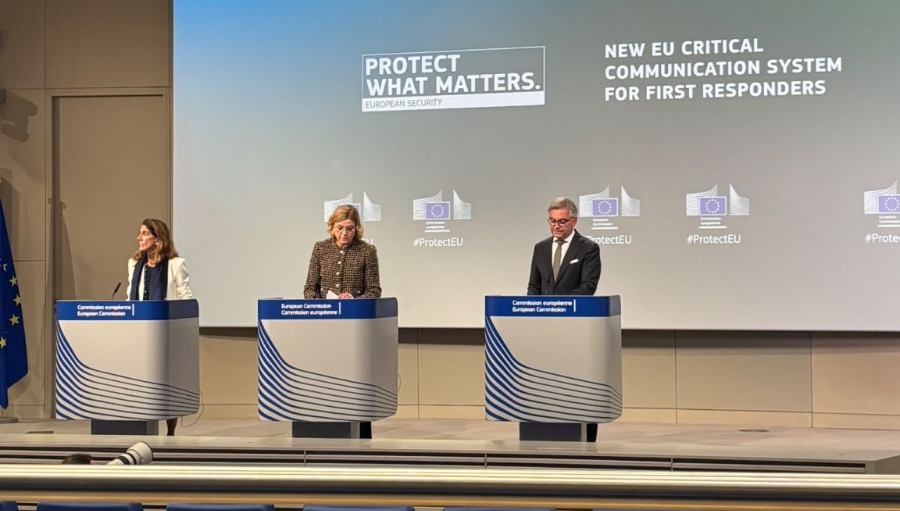
EUCCS Prep welcomes the European Commission's proposal to establish an EU Critical Communication System (EUCCS), a new framework to give European first responders secure and resilient communications in crisis situations.
Today, police, firefighters, medical services and civil protection teams often cannot communicate with one another when responding to fires, floods, storms, drone threats to critical infrastructure or terrorist attacks. Their systems are largely not interconnected and can stop working at national borders. The proposed EUCCS would allow first responders to communicate across services and across borders, in real time, including where terrestrial networks are unavailable.
Key features of the proposal :
A move to broadband. Member States would gradually shift from narrowband radio systems to broadband technology such as 5G.
Satellite back-up. EU satellites and mobile deployable communication units would maintain connectivity during blackouts or network disruption.
Richer, faster information sharing. First responders would share data, video, messages and geolocation in real time through a single secure device, improving situational awareness and coordination.
Security and resilience by design. The system would give priority to first responders, even when mobile networks are saturated, and would be protected against cyber and hybrid threats. It would be supported by a European Union Network Monitoring Centre and a European Union Security Monitoring Centre.
European tech sovereignty. Critical components, including satellites, the core mobile network and the broadband technology used, would be developed by European companies. Member States would retain full control over their national networks and over governance through a Member States' expert group.
The proposal now goes to the European Parliament and the Council for adoption. The EUCCS is planned to be launched gradually, with a built-in transition period for Member States, starting in 2030.
"Disasters do not stop at borders, and neither should the communications of those who respond to them. This proposal turns a long-standing operational need into a concrete European framework. Through our testbeds and pan-European trials, EUCCS Preparation has shown what interoperability can deliver on the ground, and we will keep building on that work with practitioners to achieve Operational Mobility to support their response operations" David Lund, Coordinator, EUCCS Preparation— PSCE
The EUCCS Prepartation Coordination team from PSCE, were present at the Commission's press conference and will continue to support Member States, practitioners and industry as the legislative process moves forward.