PREVIOUS
VIAVI Unveils CX300 TETRA Mobile Station Simulator, Advancing Mission-Critical Radio Testing Without T1 Test Mode



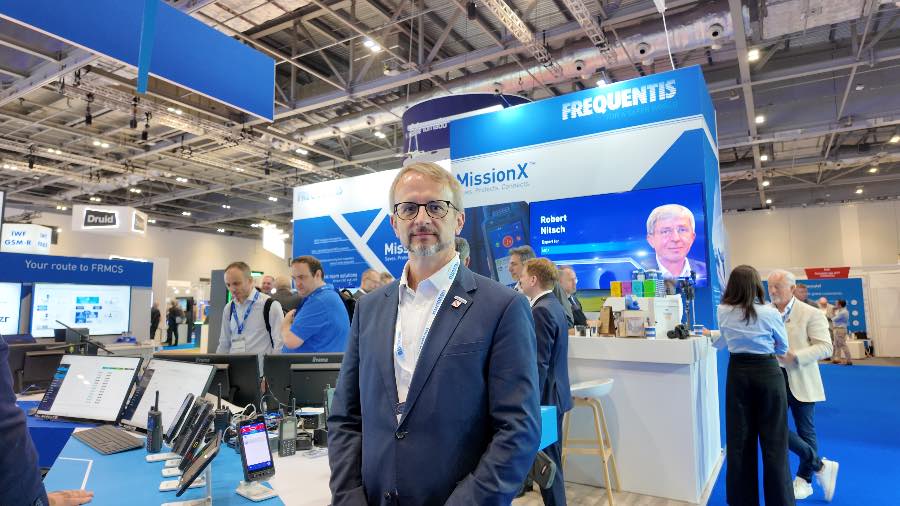
LONDON, UK — Critical Communications World (CCW) 2026 – In an exclusive interview with MCXTEND and Comunicaciones Críticas, global mission-critical communications specialist Frequentis outlined its long-term vision for the future of critical communications, emphasizing open ecosystems, interoperability, and customer protection against vendor lock-in as organizations worldwide transition toward next-generation Mission Critical Services (MCX).
With a heritage spanning almost 80 years, Frequentis has established itself as one of the most recognized technology providers supporting mission-critical operations across public safety, air traffic management, defense, public transport, and maritime sectors. Today, the company is expanding its focus to include broadband-based Mission Critical Services, helping organizations modernize their communications infrastructure while maintaining the reliability and resilience demanded by critical operations.
Speaking with MCXTEND and Comunicaciones Críticas during CCW 2026, Manuel Hintermayr, Director of Mission Critical Services at Frequentis highlighted the company's longstanding commitment to industries where communication failures are simply not an option.
"Frequentis has always focused on mission-critical communications," Manuel Hintermayr explained. "Whether it's public safety, air traffic management, defense, public transport, maritime operations, or emerging MCX networks, our mission remains the same: enabling secure and reliable communications for organizations that protect lives, infrastructure, and public services."
Supporting Critical Operations Across Multiple Industries
The company's technology footprint extends across some of the world's most demanding operational environments.
Within public safety, Frequentis solutions support emergency services including police, fire, and ambulance organizations around the globe, providing advanced control room and communication capabilities that enable coordinated emergency response.
In the transportation sector, Frequentis serves rail operators worldwide, delivering communications systems that support both operational efficiency and passenger safety. The company also maintains a significant presence within maritime communications, helping safeguard some of the world's largest coastlines through advanced communication and coordination technologies.
Perhaps most notably, Frequentis continues to play a pivotal role in global aviation. The company remains a major provider of communication systems that connect aircraft with ground operations, making its technology an integral component of modern air traffic management infrastructure.
"If someone boards an aircraft today, there is a strong possibility that Frequentis technology is supporting communications somewhere within that operational chain," Manuel Hintermayr noted.
Open Ecosystems at the Center of the MCX Strategy
As public safety agencies and critical infrastructure operators increasingly evaluate migration paths from legacy narrowband networks toward broadband-based Mission Critical Services, interoperability and ecosystem openness have emerged as major priorities.
According to Frequentis, the future success of MCX deployments depends not only on technological innovation but also on ensuring customers retain flexibility and freedom of choice throughout their digital transformation journeys.
The company positions itself as a strong advocate of open MCX ecosystems, working closely with a growing network of strategic partners to deliver interoperable solutions that can evolve alongside customer requirements.
During CCW 2026, Frequentis highlighted several partnership initiatives and indicated that additional ecosystem announcements are expected in the coming months.
"We see ourselves as a highly capable MCX provider because we embrace an open ecosystem approach," Manuel Hintermayr explained. "Partnerships are essential to delivering value and ensuring customers can confidently move toward future communications environments."
Protecting Customers from Vendor Lock-In
One of the strongest themes emerging from the interview was the need to protect critical communications users from technology lock-in as networks evolve.
For public safety organizations, transportation operators, utilities, and other critical infrastructure stakeholders, technology investments often remain operational for decades. As a result, selecting interoperable and standards-based solutions has become increasingly important.
Frequentis believes open architectures and collaborative ecosystems can help customers modernize communications networks while reducing long-term risk.
"Our objective is to help customers transition into the future without being endangered by vendor lock-in," Manuel Hintermayr emphasized. "Organizations need confidence that their technology investments will remain flexible, scalable, and interoperable as requirements continue to evolve."
Building the Next Generation of Critical Communications
As the global critical communications industry accelerates its shift toward broadband technologies, Mission Critical Services are expected to become a foundational element of future operational communications across public safety, transportation, defense, utilities, and maritime sectors.
Frequentis' message at CCW 2026 reflects a broader industry trend: future networks must deliver not only advanced capabilities, but also openness, interoperability, and investment protection.
With decades of experience supporting some of the world's most demanding operational environments, Frequentis appears determined to position itself as a key enabler of this next chapter in mission-critical communications—one built on collaboration, standards, and customer choice.